Loading...
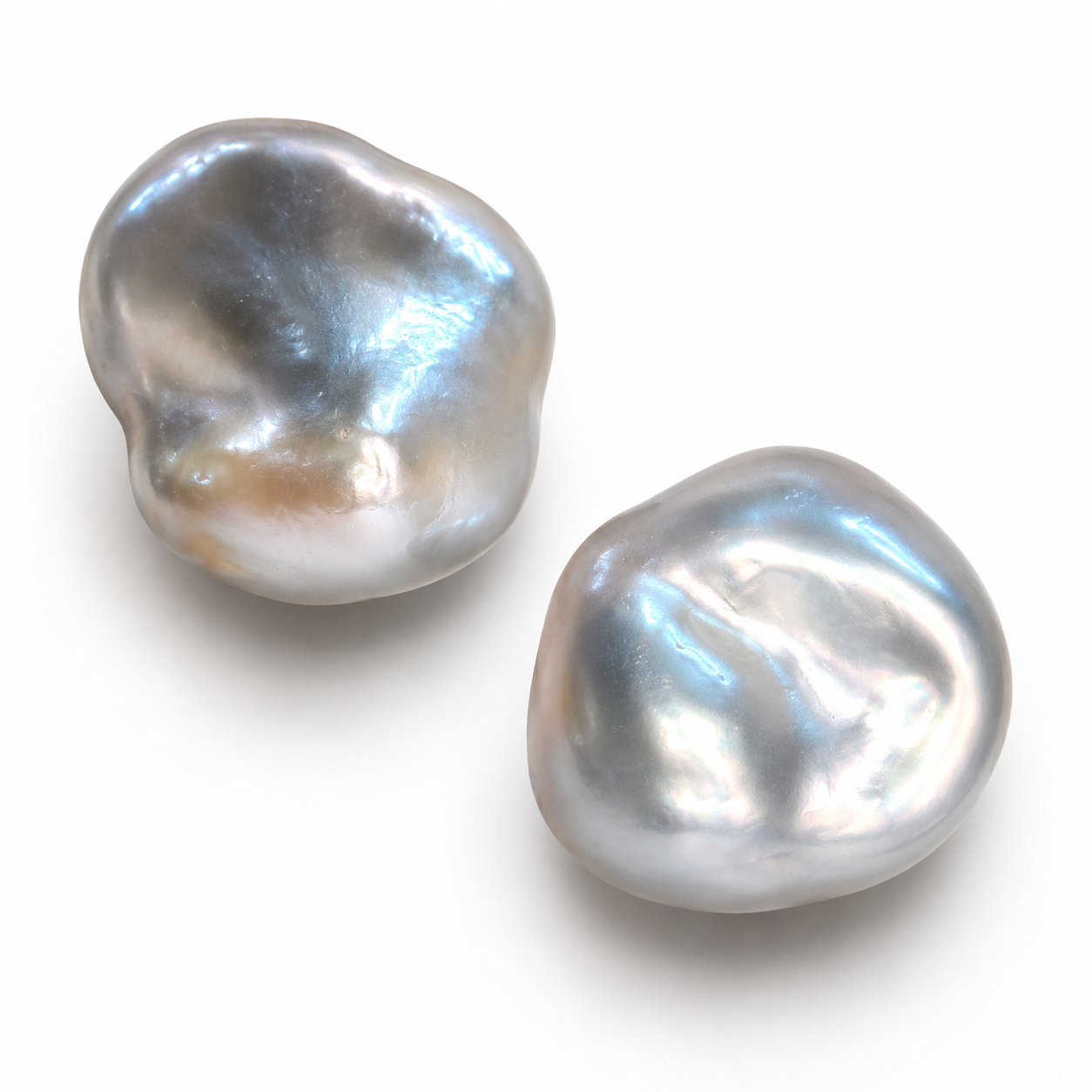
One pair, one of a kind: silver South Seas keshi pearls set as studs. A closer look at what they are, why keshi looks the way it does, and what separates them from anything made in volume.
The Katura Editors
Fine jewelry essays from the Katura1999 studio.
What you notice first is the light. Not a sparkle, not a flash, but a slow, silvery glow that seems to come from somewhere beneath the surface, the way moonlight sits on still water. Then you notice the shape: not a perfect sphere, but something softer, more organic, as though the pearl grew into its own idea of roundness. These are our Silver South Seas Keshi Earrings, and they are, in our studio's words, pearl studs like no other.
Most pearl studs are designed to disappear into uniformity: two matched spheres, identical in size, identical in sheen. That has its charm. But these take a different route. They are silver South Seas keshi pearls, and the word keshi matters here. Keshi pearls are valued for being pure pearl, and their forms tend toward the organic rather than the machine-perfect. Hold the pair up and you will see two pearls that belong together without being clones.
The color is the second thing. Silver is a difficult word to use about pearls because it sounds cold, and these are not cold. The tone is cool but luminous, with a lustre that reads as soft rather than glassy. We have always found that it behaves differently depending on where you stand: indoors it is quiet and pearly, near a window it brightens.
The materials line is short, and we like it that way: pearls, South Seas pearls, keshi, and 14KW, which is 14 karat white gold. The pearls are the whole point. The setting exists to hold them and then step back.
A polished finish on the metal keeps the whole piece in one visual register. Nothing competes with the pearl. White metal and silver pearl sit in the same family of cool tones, so the eye reads the earring as a single quiet gesture rather than a stone plus a mount.
We describe these pearls as rare and precious, and we say plainly that we buy them whenever given the opportunity. That phrasing is deliberate. It is not a promise of an endless supply; it is the opposite. Pearls of this kind do not arrive on a schedule, and a pair that works, with the right color, the right lustre, and a natural kinship between the two, is something we act on when we see it.
It also explains why only one pair of these exists. This is a one of a kind piece, and because it is handmade, each piece varies slightly. If you are used to buying jewelry from a catalogue where the item in the photograph is one of ten thousand identical items, that is a different relationship. The pair you see is the pair that exists.
It helps to be specific about what mass production tends to do to pearl earrings. It prizes sameness: pearls sorted to a narrow template, set quickly, and sold in volume. There is nothing wrong with that as a business. But it is not what this pair is about.
Here the differences are in the details you can feel and see:
Handmade also affects timing. The lead time is two to four weeks, which is what you would expect when a person, not an assembly line, is finishing the work.
We have a habit of saying that a piece suits everyone, and it is rarely true. So here is what we can say with confidence from how we see these pearls: the lustre and color flatter the blond, the silver-haired, and the brown-eyed. Blond hair picks up the cool glow and keeps its warmth. Silver hair finds an echo, a tone that feels intentional rather than matched. Brown eyes, with their depth, make the pearl look brighter by contrast.
Because they are studs, they sit close to the earlobe and frame the face rather than dangle from it. That makes them an easy choice for a bride who wants something discreet for the day, or for anyone who wants a pair of earrings that can move from a morning meeting to an evening table without a change.
Pearls rarely live alone in our studio, and these studs play well with the company we keep. If you like the idea of building a quiet pearl wardrobe, our essay on a keshi pearl necklace with a blue topaz clasp shows how keshi can move from daytime softness to evening polish. For something with more contrast, a baroque pearl paired with black tourmaline proves that irregular pearls can carry real drama. And if you enjoy a small, witty detail, there is the pearl necklace that closes with a tiny silver padlock.
Studs are the calm center of such a set. They do not argue with a necklace; they let it speak. You can browse more of our earrings to see how other pairs take the same restrained approach.
There is a particular kind of jewelry that does not announce itself. Someone notices it across a table, leans in, and asks what the pearls are. That is the kind of piece this is. It asks nothing of you except that you wear it, and it rewards you with that low, silvery light every time you turn your head.
We think these are nothing short of breath-taking, and we have tried here to explain why without leaning on adjectives: the pearls are keshi, they are South Seas, they are silver in tone, they are set in polished metal, and there is only one pair. The rest, the glow against your hair, the way they catch a window, is something you can only learn by seeing them in person.
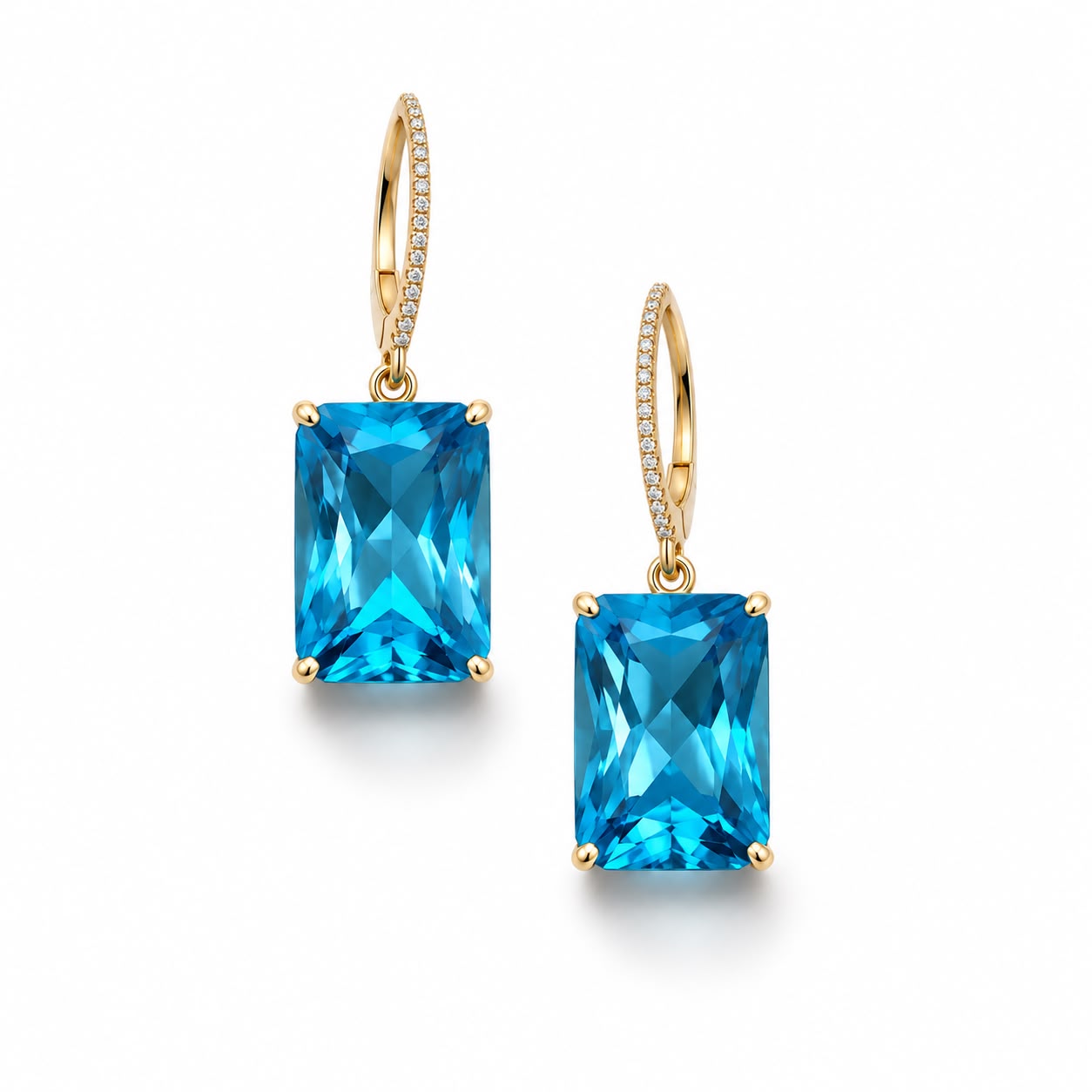
Large blue topaz hang from diamond ear wires in polished yellow gold. We look at what you notice first, how the stones are cut, and why a handmade pair is never quite identical.
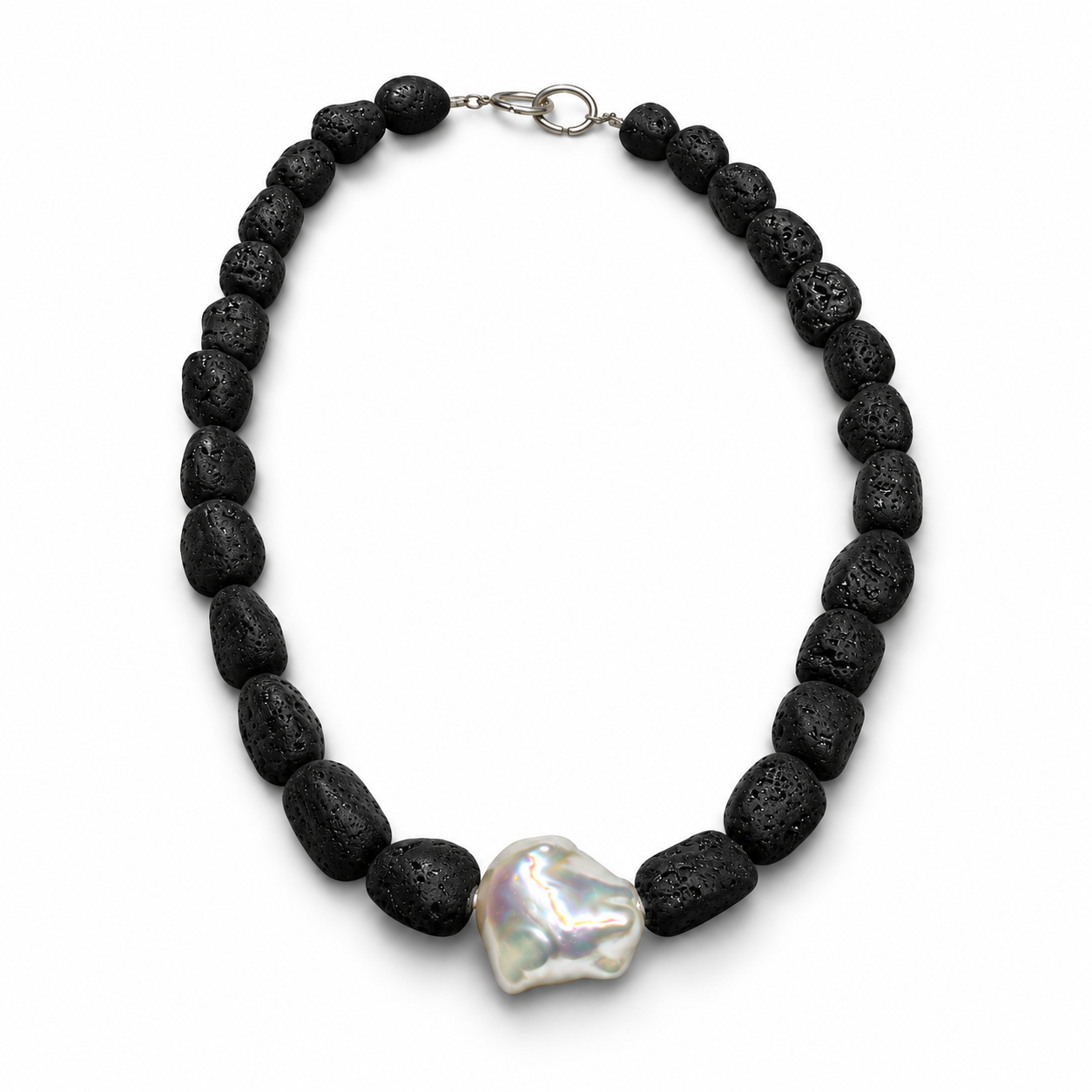
Deep black tourmaline nuggets meet a lofty white baroque freshwater pearl in a single sterling silver necklace. Here is what you notice first, how it is made, and why the clasp is the quiet surprise.
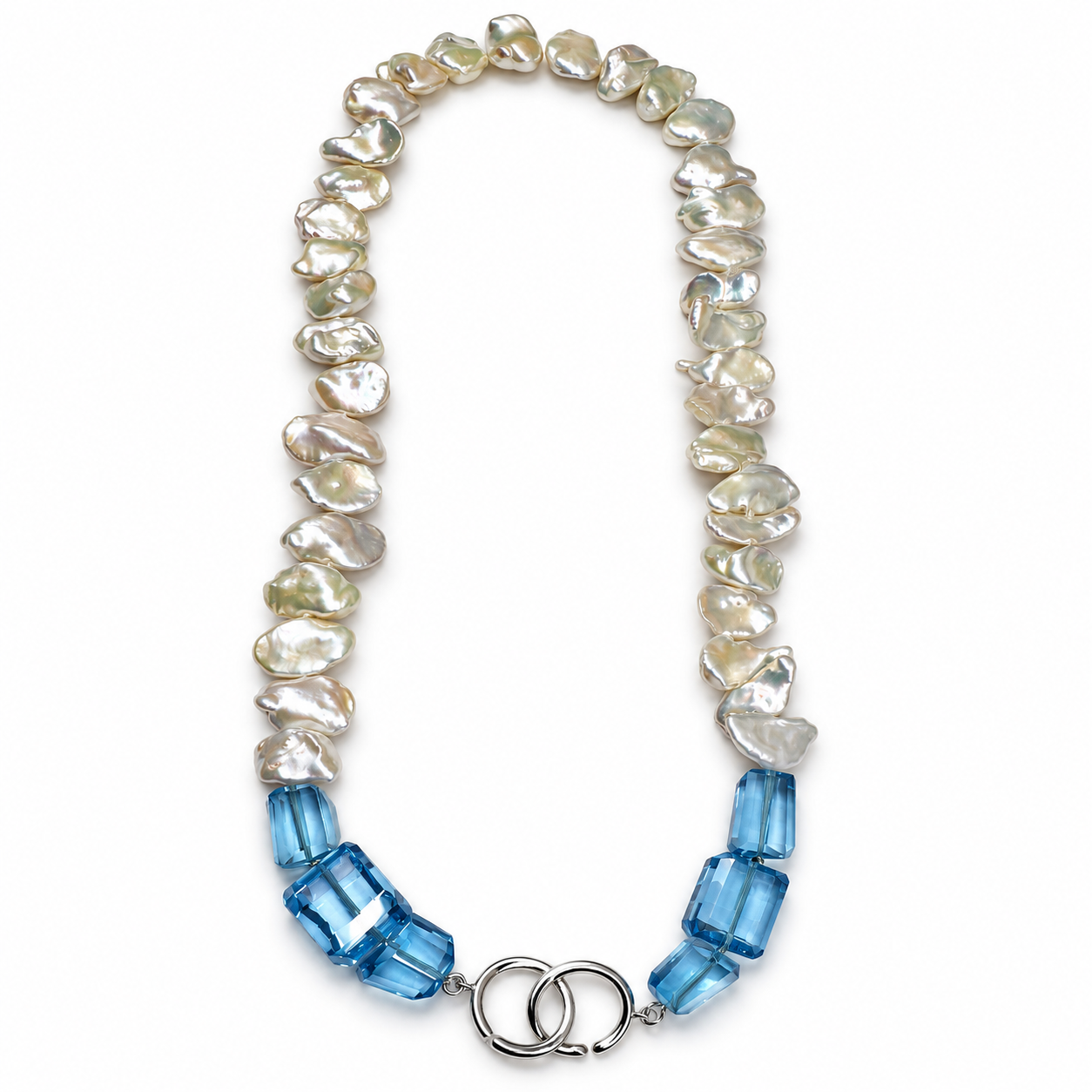
A strand of lustrous freshwater keshi pearls, a geo-cut blue topaz, and a signature sterling silver clasp that can lead the look or disappear behind you. A closer look at how this necklace is made and worn.
Tags: