Loading...
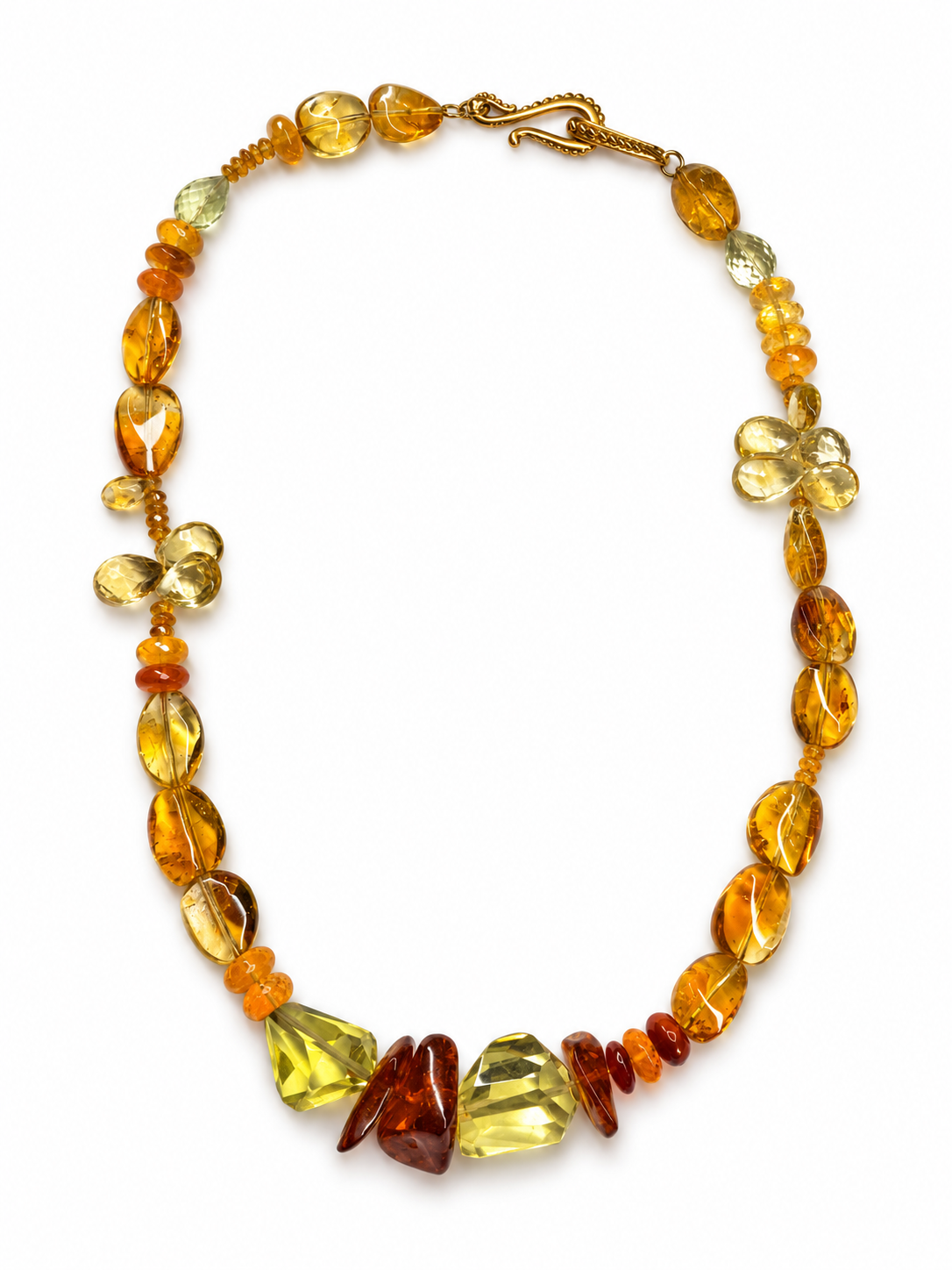
A golden bead necklace of citrine, amber and lemon quartz, finished in antique tones and made as a single piece. Here is what the eye catches first, and why the details matter.
The Katura Editors
Fine jewelry essays from the Katura1999 studio.
The first thing you notice is the color, and it is not one color at all. It is a range of golds, from pale lemon to deep, resinous amber, strung together so that the necklace seems to hold a little late-afternoon light of its own. We call this piece Amber and Citrine Necklace: An Ode to Honey, and once you see it, the name feels less like a flourish than a plain description.
Our studio description says it best: the eye is pleased. There is a subtlety to the colors, the shapes and the cuts, and they are combined into one golden piece. Nothing here shouts. Instead, the necklace rewards a second and third look, the way a jar of honey held up to a window reveals clearer, brighter and darker places you missed at first glance.
It is a citrine and amber bead necklace, and the beads are not all alike. Some read as clear and bright, others warm and soft. That variety is the point. A strand of identical beads gives you uniformity; this gives you a conversation between materials.
The necklace brings together three stones, each with its own character.
Together they form a gradient of gold rather than a single flat shade. Put the three side by side and you start to understand why a designer would resist the temptation to simplify. The charm lives in the differences.
The piece carries an antique finish, a choice that suits the stones. Where a high polish can feel glaring against warm gemstones, an antique finish lets the beads take center stage and gives the whole necklace a settled, lived-in quality, as though it has been in the family for a while even though it is new to you.
It is also handmade, and each piece varies slightly. That is a quiet but real distinction from anything mass-produced. Factory jewelry is designed to be repeated exactly. This necklace is assembled by hand, which means the rhythm of its beads and the way its colors fall belong to this strand alone. In fact, only one exists. If you wear it, nobody else will be wearing its twin.
The piece sits within our Starfish on the Coral Sea Collection, and you can find it, along with its neighbors, among our necklaces. You can also see the piece itself on its own page: the citrine and amber necklace. At $380, it is a necklace for someone who prefers color with some nuance to it.
Think of how it might be worn. Against a plain neckline, the golds do all the work. Against skin with a bit of sun on it, the warmth doubles. It is an easy companion for a gift, an anniversary or a bridal-party present when you want something personal rather than matching. If one-of-one pieces appeal to you, our essays on the Katura Architect Ring and on the diamonds and pearls earrings explore the same idea in other materials.
Some jewelry is admired and forgotten. Other pieces linger because their pleasure is slow. An Ode to Honey belongs to the second kind. Its beauty is in the layering of tones, the variety of shapes and the honest, handmade variation that makes it singular.
It is, as we like to say, pretty sweet. But the sweetness is not sugary. It is the warm, complex kind that you notice more the longer you look.
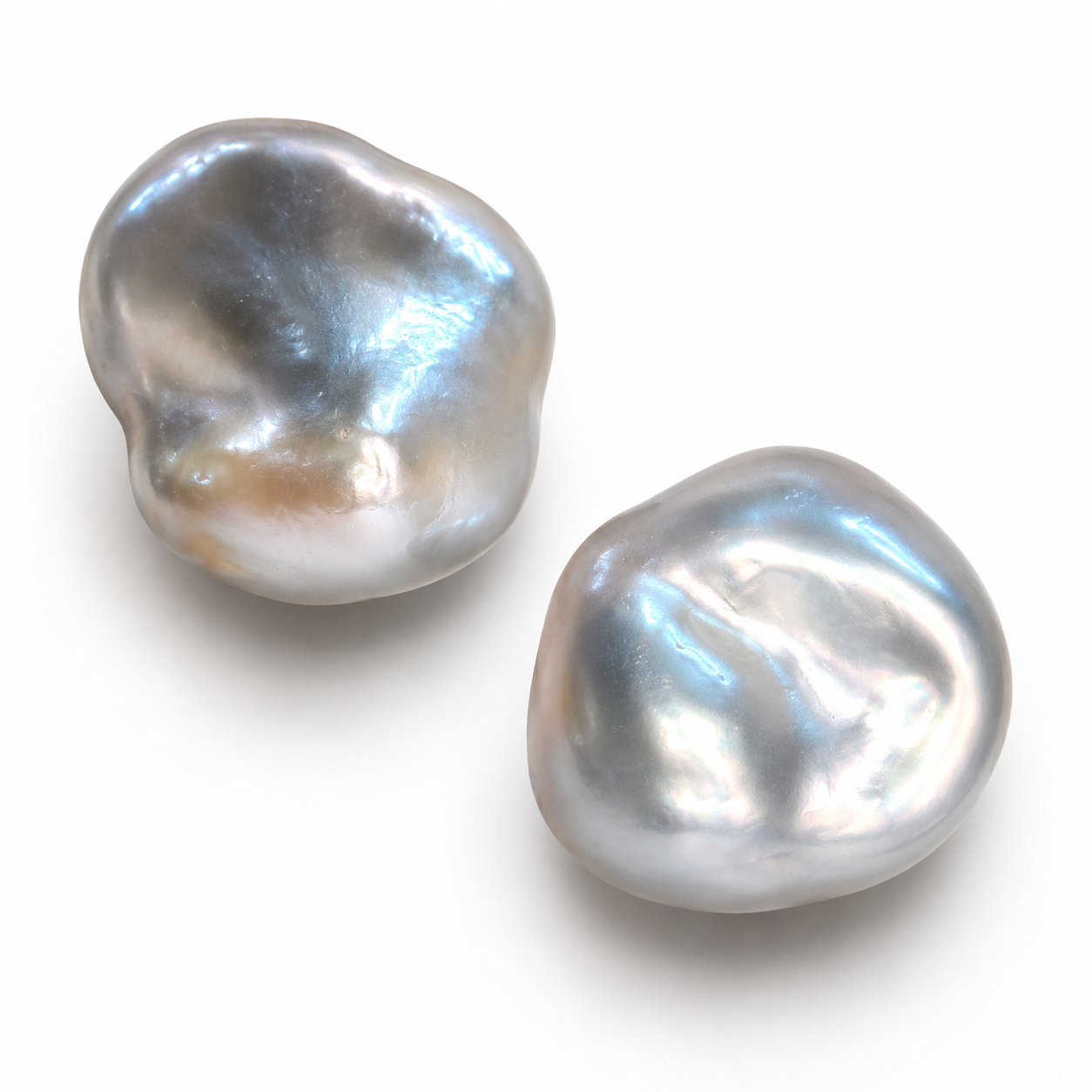
One pair, one of a kind: silver South Seas keshi pearls set as studs. A closer look at what they are, why keshi looks the way it does, and what separates them from anything made in volume.
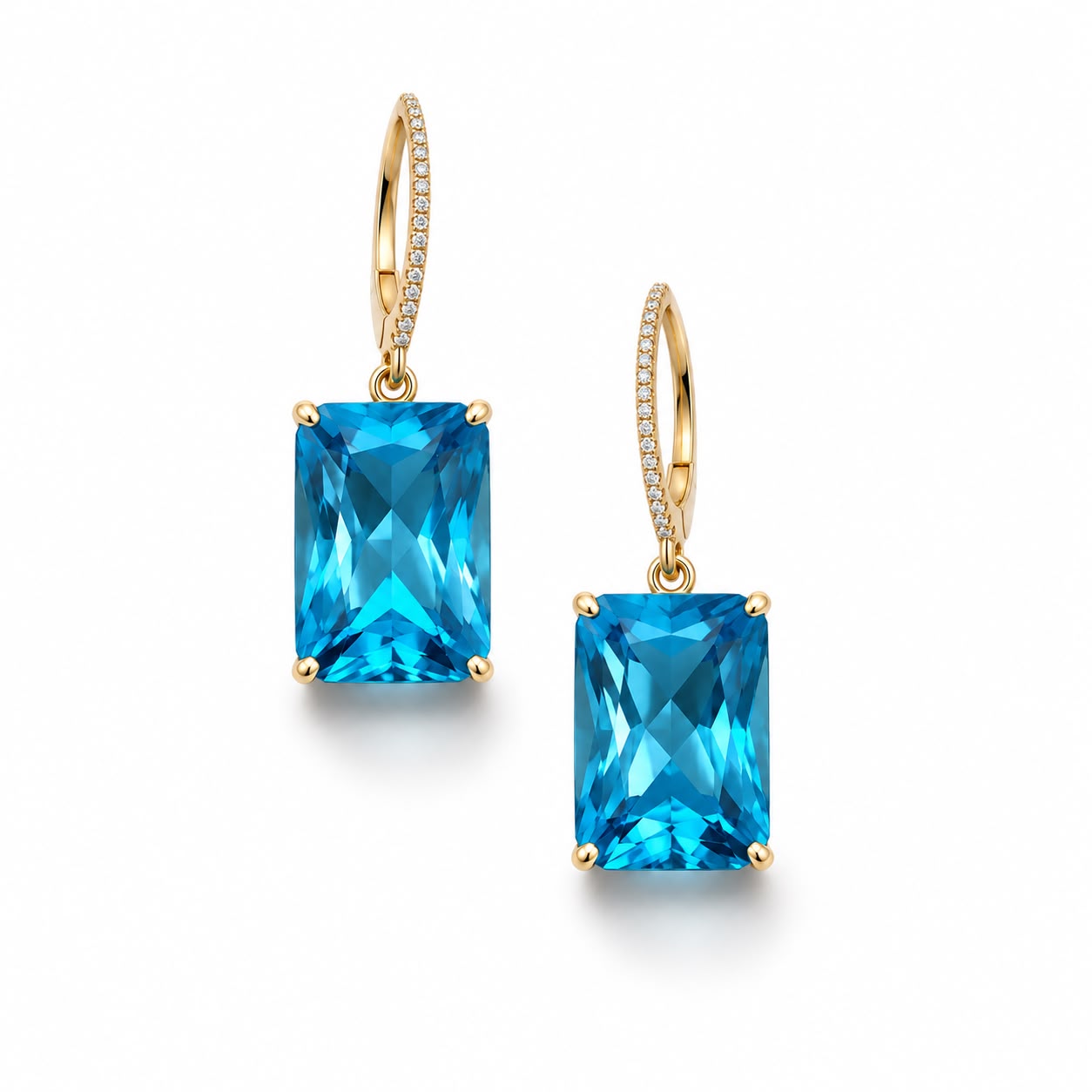
Large blue topaz hang from diamond ear wires in polished yellow gold. We look at what you notice first, how the stones are cut, and why a handmade pair is never quite identical.
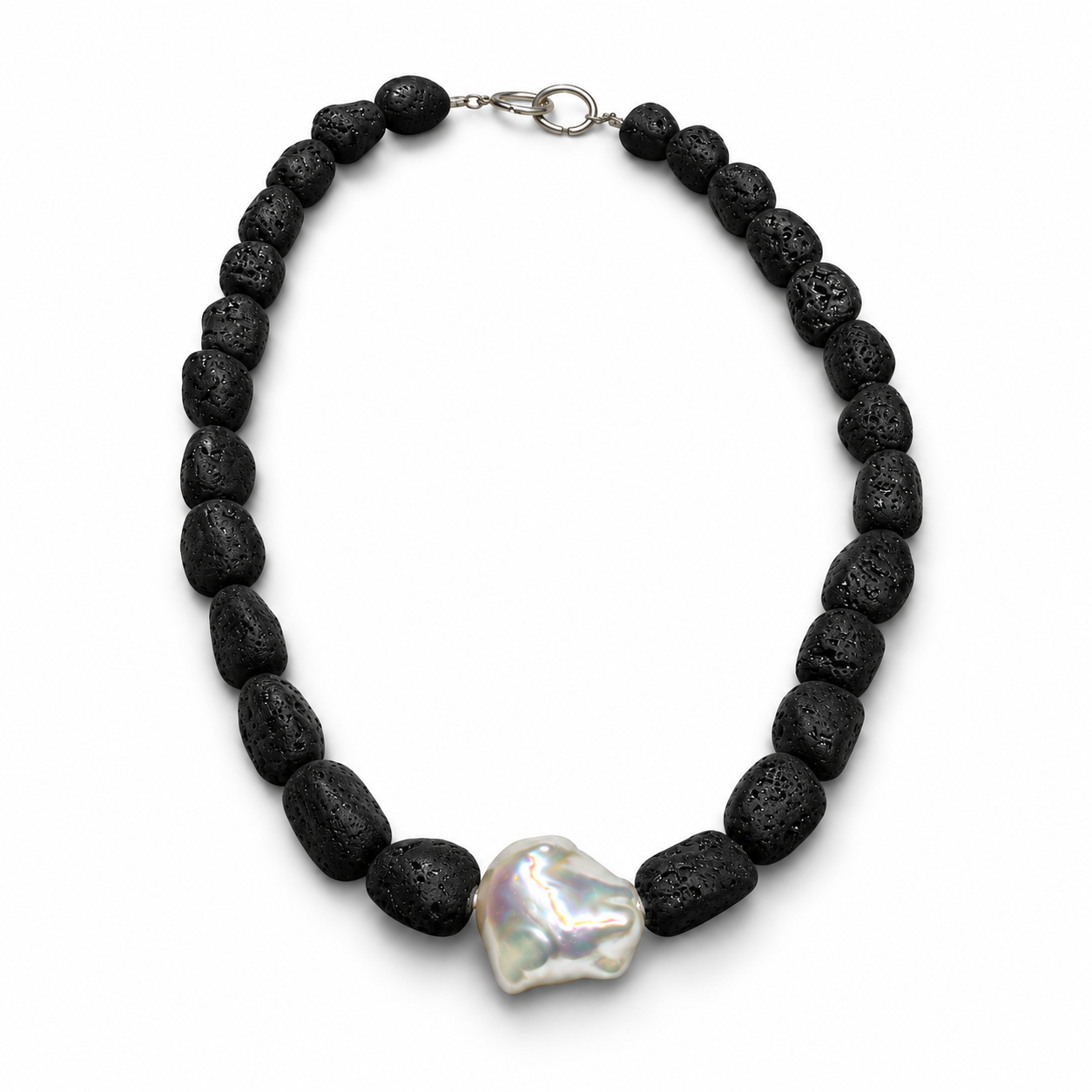
Deep black tourmaline nuggets meet a lofty white baroque freshwater pearl in a single sterling silver necklace. Here is what you notice first, how it is made, and why the clasp is the quiet surprise.
Tags:
As featured above
Amber and Citrine Necklace: An Ode to Honey
From the Katura studio · $380
Shop this piece →