
Loading...
Diamond stations, a signature Katura clasp, and a strand of natural golden South Sea pearls. On why this is the necklace I reach for nine times out of ten — and what I've learned about wearing it.
Katura 1999
Katura is the founder and designer of Katura1999 — a fine jewelry studio celebrating 25+ years of one-of-one design.
 Shop this piece
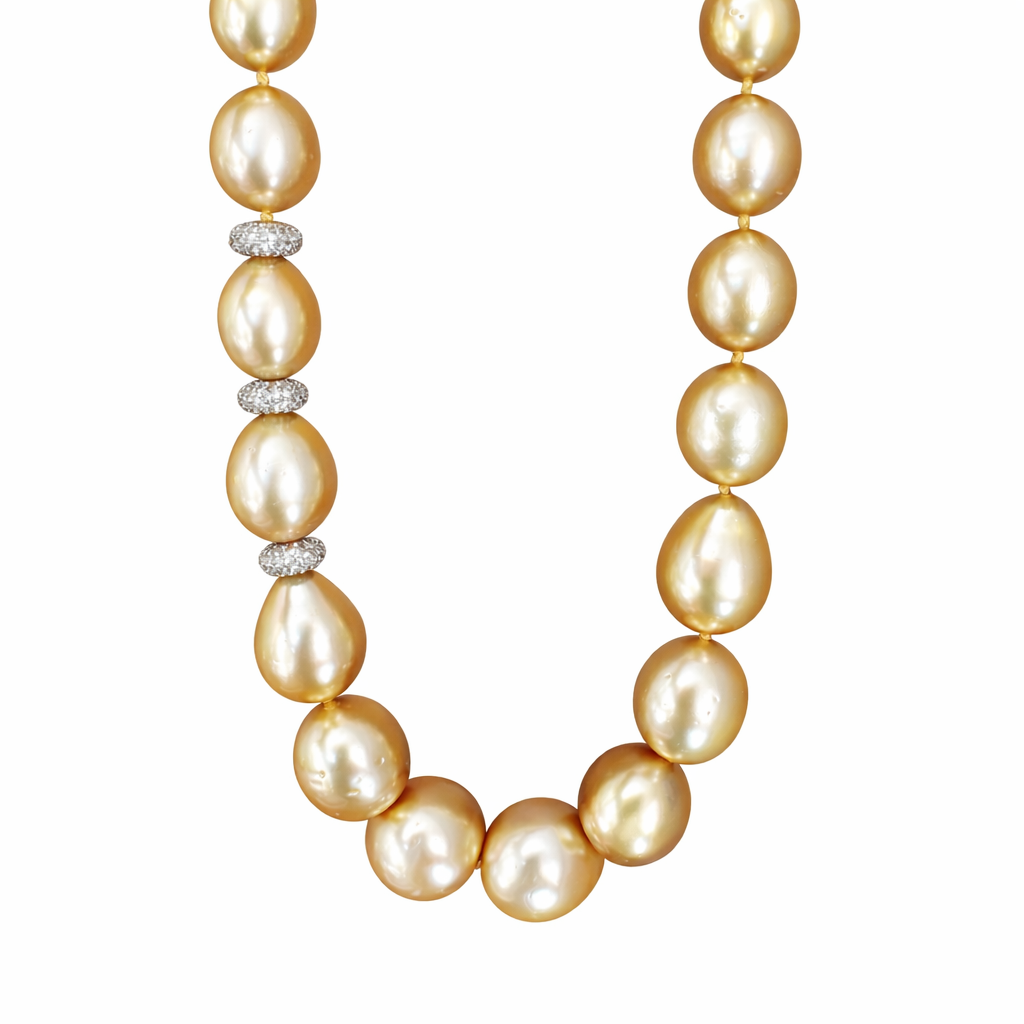
Pictured: Natural Golden South Seas Pearls with Diamond Stations and Signature Katura Clasp
If I could only keep one necklace from my own collection, friends, this is the one. Golden South Sea pearls — the warm, butter-honey kind, not the platinum-cool South Sea you see in white — interspersed with subtle diamond stations and finished with the Signature Katura clasp. It is, after twenty-five years of designing, the necklace I reach for the most.
The South Sea pearl is grown in the gold-lipped Pinctada maxima oyster, native to a stretch of warm water that runs from northern Australia through Indonesia and the Philippines. Pinctada maxima is enormous — the oyster itself can be 12 inches across — and it produces some of the largest pearls in the world, often 10 to 14mm, occasionally larger.
The "golden" comes from a specific genetic variant of the oyster: a gold-pigmented mantle tissue that yields pearls in shades from pale champagne to a deep, almost saturated honey gold. The deeper the natural color, the rarer the pearl, and the higher the price. (No reputable seller dyes a golden South Sea — the color is the point.) These are sometimes called "the queen of the pearl world," and I'm willing to defend that title.
Between every few pearls, you'll see a small diamond station — a tiny prong-set diamond on a slim length of gold. Why? Because pearls of this caliber benefit from a little metallic sparkle to lift them. Without diamond stations, a long strand of golden pearls is gorgeous but heavy, a dense honey-colored line. With stations, the strand catches and releases light along its length, and the eye can travel.
This is also a clever practical detail. The diamonds, set in their slim gold tubes, give the necklace structure. It hangs cleanly, doesn't pool awkwardly at a neckline, and reads as a piece of jewelry rather than just a string of pearls.
Most necklace clasps are an afterthought, hidden behind the neck. Mine is built to be seen. The Signature Katura clasp can be worn in front, off to one side, where it functions almost like an asymmetric pendant. It also has a small detail — I won't spoil it for someone who hasn't held one — that makes it satisfying to fasten one-handed. (The number of clasps that require a husband, a roommate, or a contortionist's pose to operate is genuinely concerning.)
I'll show my work.
I selected each pearl in this strand for body color, luster, and surface. I do not buy pre-strung pearl strands at any quality level — every Katura strand is matched in our studio, pearl by pearl. It is slow work and not particularly glamorous; you sit at a table with hundreds of pearls and a tray and you nudge them around for an hour. But the result is a strand where the eye reads "harmony" instead of "well, mostly harmony."
Three notes.
One: re-string every two to three years if you wear it weekly. Silk thread softens with skin oil and humidity. A re-string is an inexpensive 1-week procedure, and it's how strands last fifty years instead of fifteen.
Two: store it flat, not hanging. Hanging stretches the silk over time and can warp the spacing.
Three: wear it. The number-one enemy of a pearl is a closed jewelry box. Pearls love air, oxygen, your skin, and movement. The most beautiful golden pearls I've ever seen belonged to a 90-year-old woman who had worn them, she told me, "every Tuesday since 1967."
Be that woman.
— Katura
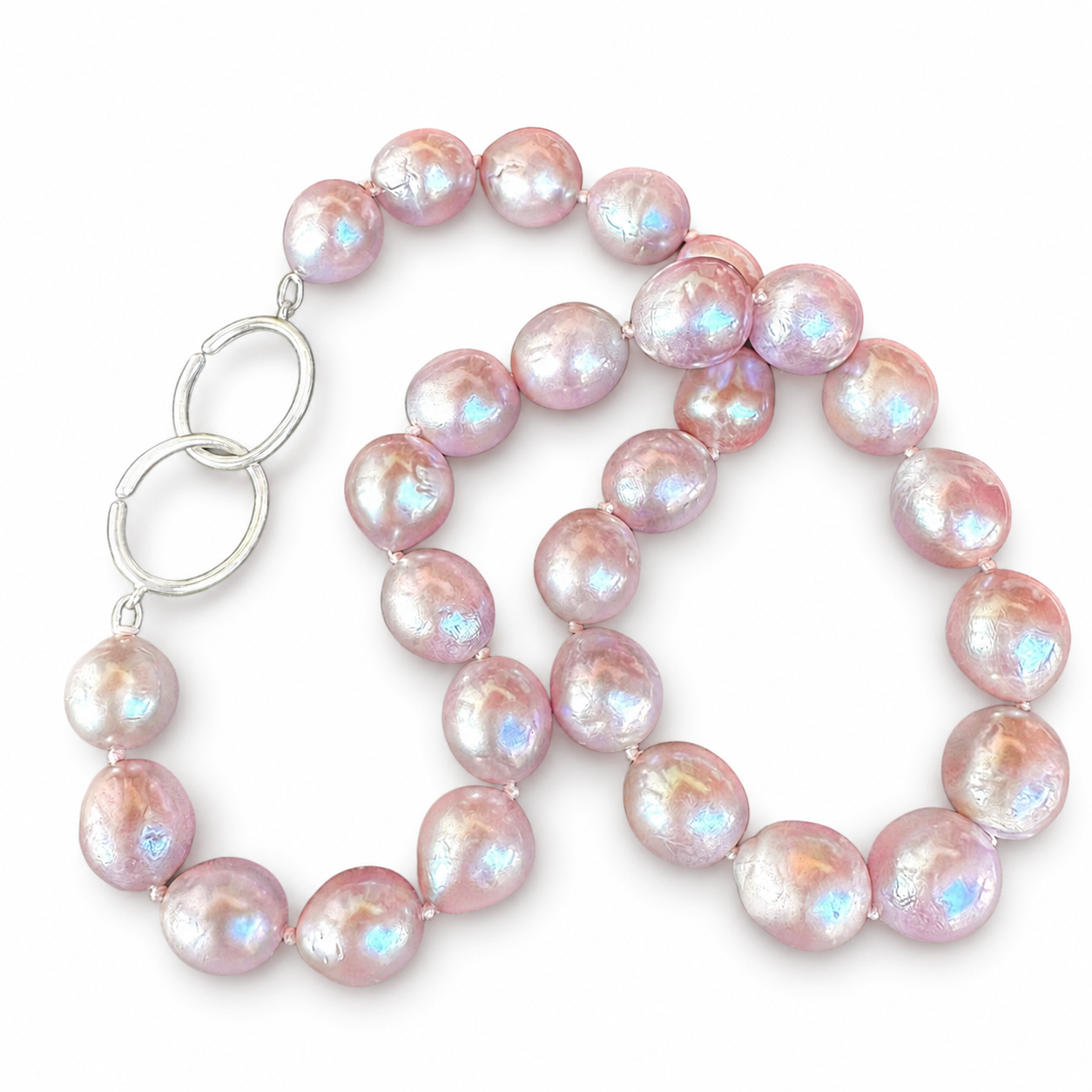
Discover the allure of our Cultured Freshwater Pearls in Pink with Sterling Silver. A unique necklace that showcases the exceptional craftsmanship of Katura.
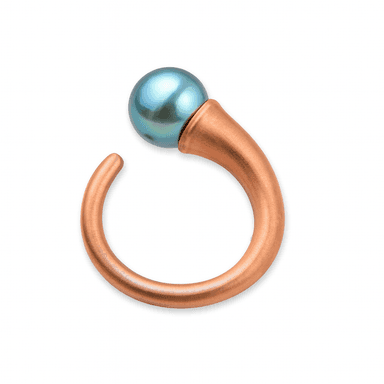
Discover the allure of the Chasing Ring in 14K Rose Gold with Tahitian Pearl. A unique, handcrafted masterpiece that captivates with its elegance and charm.
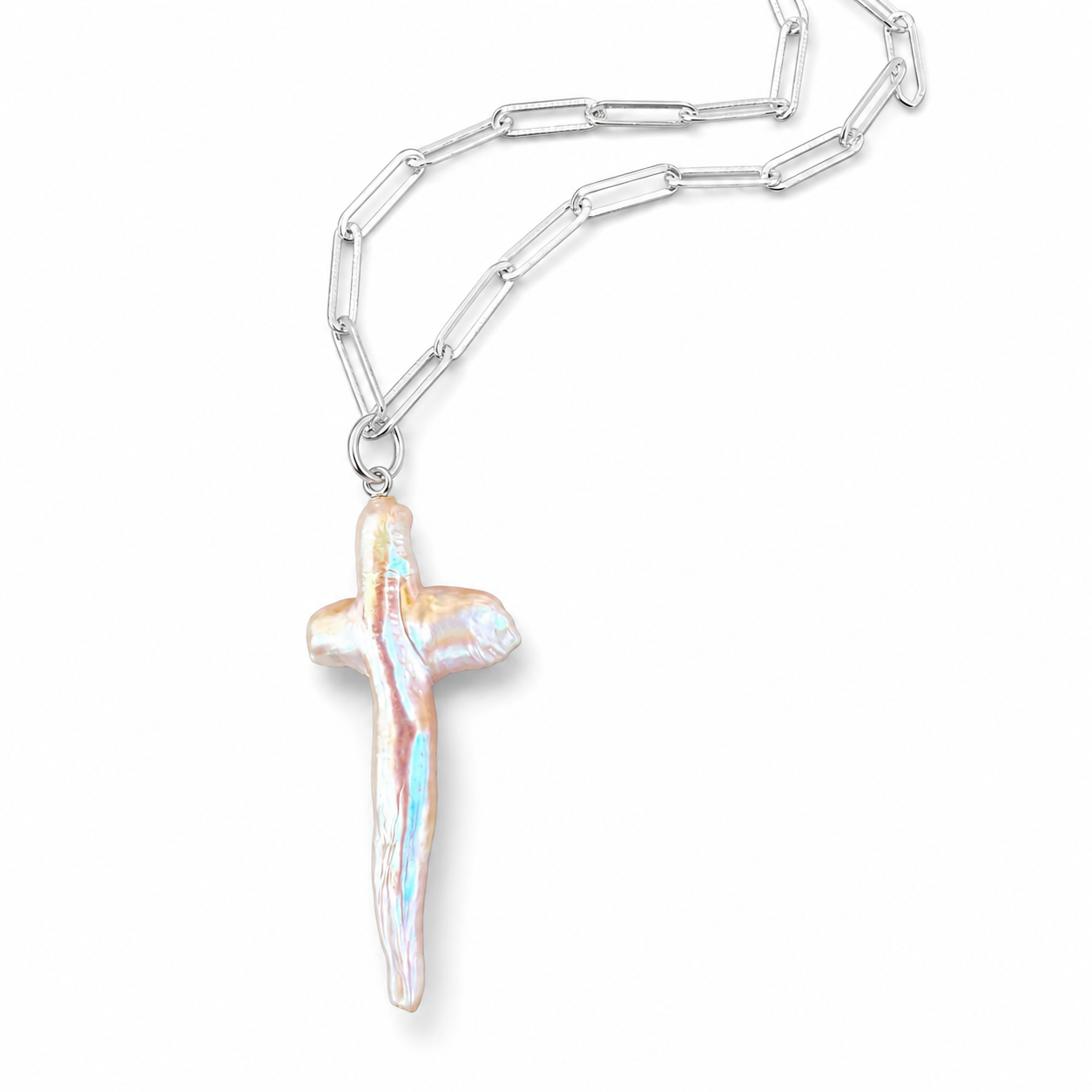
The Sterling Silver and Pearl Cross Pendant is a unique, handmade piece that blends the elegance of pearls with polished silver, offering a one-of-a-kind allure.
Tags:
As featured above
Natural Golden South Seas Pearls with Diamond Stations and Signature Katura Clasp
From the Katura studio · $4,900
Shop this piece →