
Loading...
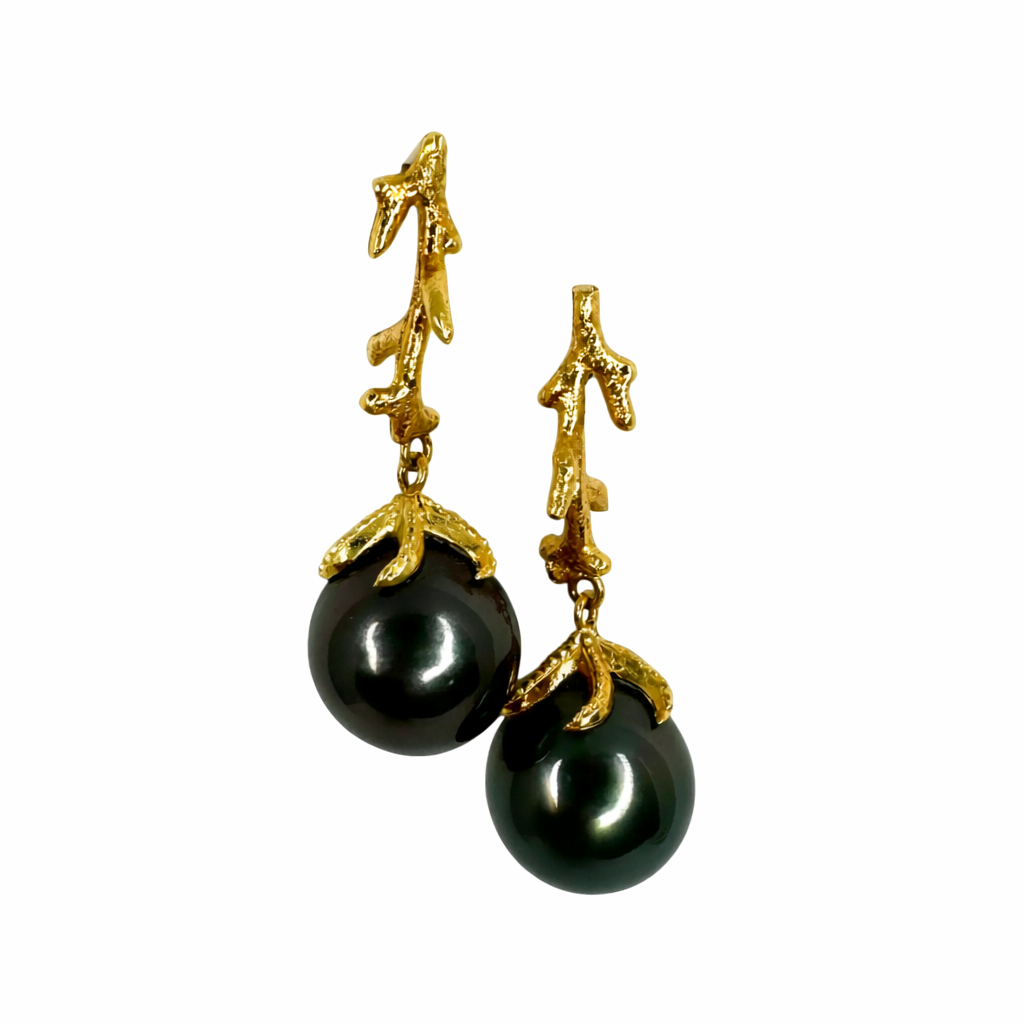
Tahitian pearls are gloriously unconventional — and our 18K Yellow Gold Starfish drop earrings give two of them the seafloor stage they deserve.
Katura 1999
Katura is the founder and designer of Katura1999 — a fine jewelry studio celebrating 25+ years of one-of-one design.
 Shop this piece
Pictured: Starfish Live on the Coral Reef Pearl Earrings in 18K Yellow Gold with Tahitian Pearls
Friends, the Tahitian pearl is the great unconventional beauty of the pearl world. While the Akoya is poised, white, and Audrey-Hepburn polite, the Tahitian shows up in a black silk dress with overtones of green, peacock blue, aubergine, and — if you're lucky — a faint sliver of rose. They are moody. They are dramatic. And they are the reason I designed the Starfish Live on the Coral Reef Earrings in 18K yellow gold.
The Tahitian pearl is grown in the black-lipped oyster, Pinctada margaritifera, in the warm, painfully blue lagoons of French Polynesia. The oyster's mantle tissue is darkly pigmented, which is why the pearl emerges in those gorgeous deep colors — pearls take their hue from the oyster, not from any treatment. (Anyone selling a "dyed Tahitian" is selling something else; the natural Tahitian is already black.)
One oyster grows one pearl at a time, and it takes the better part of two years. Of every hundred pearls harvested, only a small percentage are large enough, round enough, and lustrous enough to be considered fine. The math, as it does for emeralds, ends up explaining the price.
Five things, in roughly this order:
The 18K yellow gold starfish was a deliberate counterweight. Most Tahitian pearl earrings I see are mounted in sterling silver or white gold to "match" the cool tones of the pearl. I think this is a mistake. The dark Tahitian pearl is already cool; pairing it with cool metal flattens the whole thing. 18K yellow gold creates a temperature contrast — warm metal, cool pearl — that makes both elements look more vivid. It's the same color theory that makes a navy-blue painting pop in a gilded frame.
The single most useful thing I can tell you about long pearl earrings: pair them with a high collar. A turtleneck. A buttoned-up oxford. A cashmere mock-neck. The neckline frames the pearl drop the way a mat frames a print. It pulls the eye up. The earring does its job.
If you wear them with a deep V or a low neckline, the pearl drop is competing with everything happening at your collarbone. Pretty, but you've doubled the visual workload of your morning.
Pearls are softer than nearly everything else in your jewelry box (Mohs 2.5 to 4). They scratch from rough metal, including from each other in a drawer. Store these in a soft pouch or a fabric-lined slot, away from your diamonds and sapphires.
Last on, first off. Always. Perfume and hairspray are pearl killers. Wipe the pearls with a soft, slightly damp cloth after wearing.
And do not — I beg you — store pearls in a sealed plastic bag for years. Pearls are organic; they need to breathe. A sealed bag will dehydrate them and the surface can craze.
The Tahitian pearl wearer, in my experience, is the woman who already owns a pair of Akoyas and has decided pearls don't have to be the polite earring. She's earned an earring with some swagger. She's also probably wearing a navy suit twice a week and very, very tired of small studs.
If that's you, friends, welcome. The reef has been waiting.
— Katura
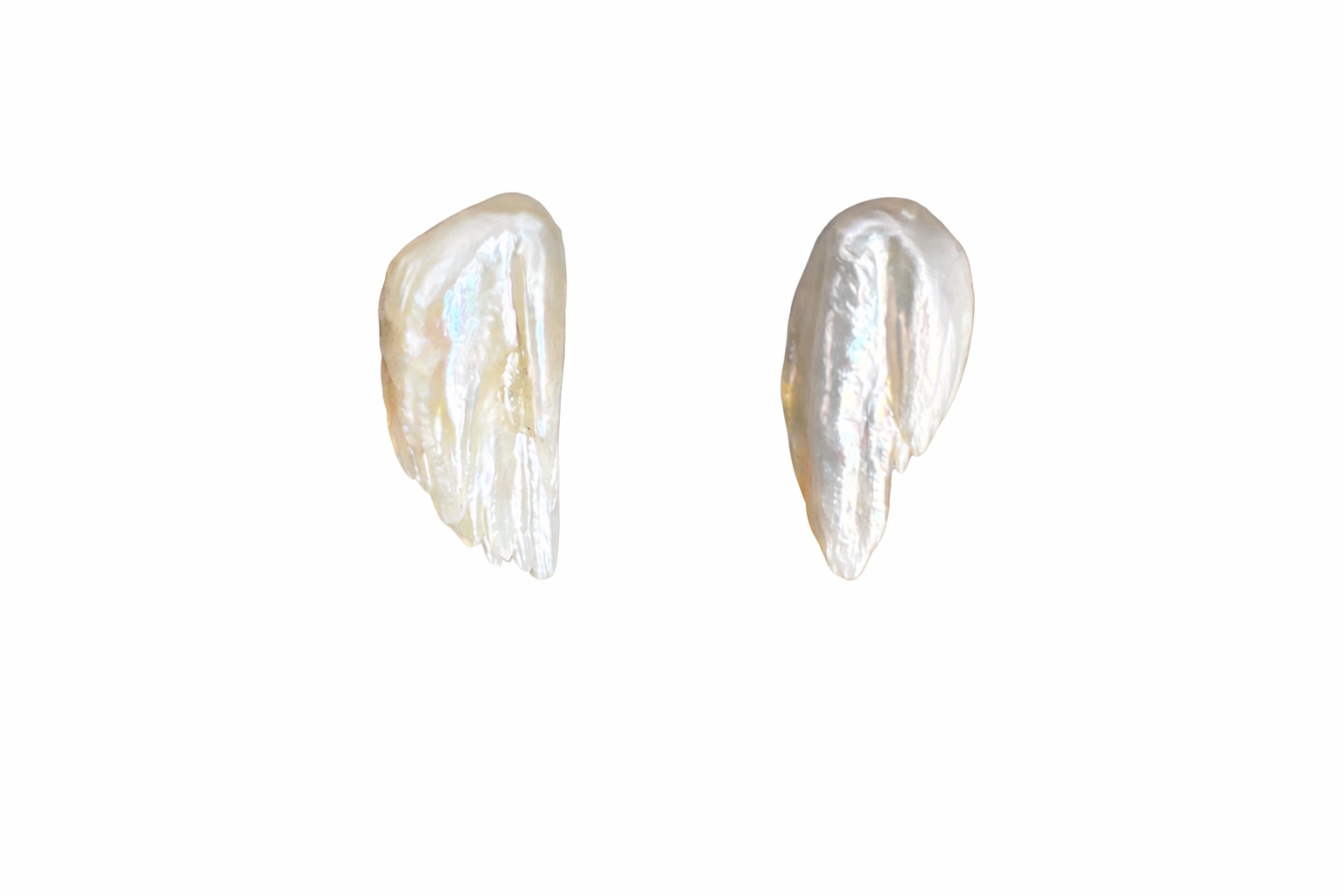
Asymmetric river pearls in 14K yellow gold posts drop with lustrous, textured beauty. We explore what makes these one-of-a-kind studs unmistakably handcrafted.
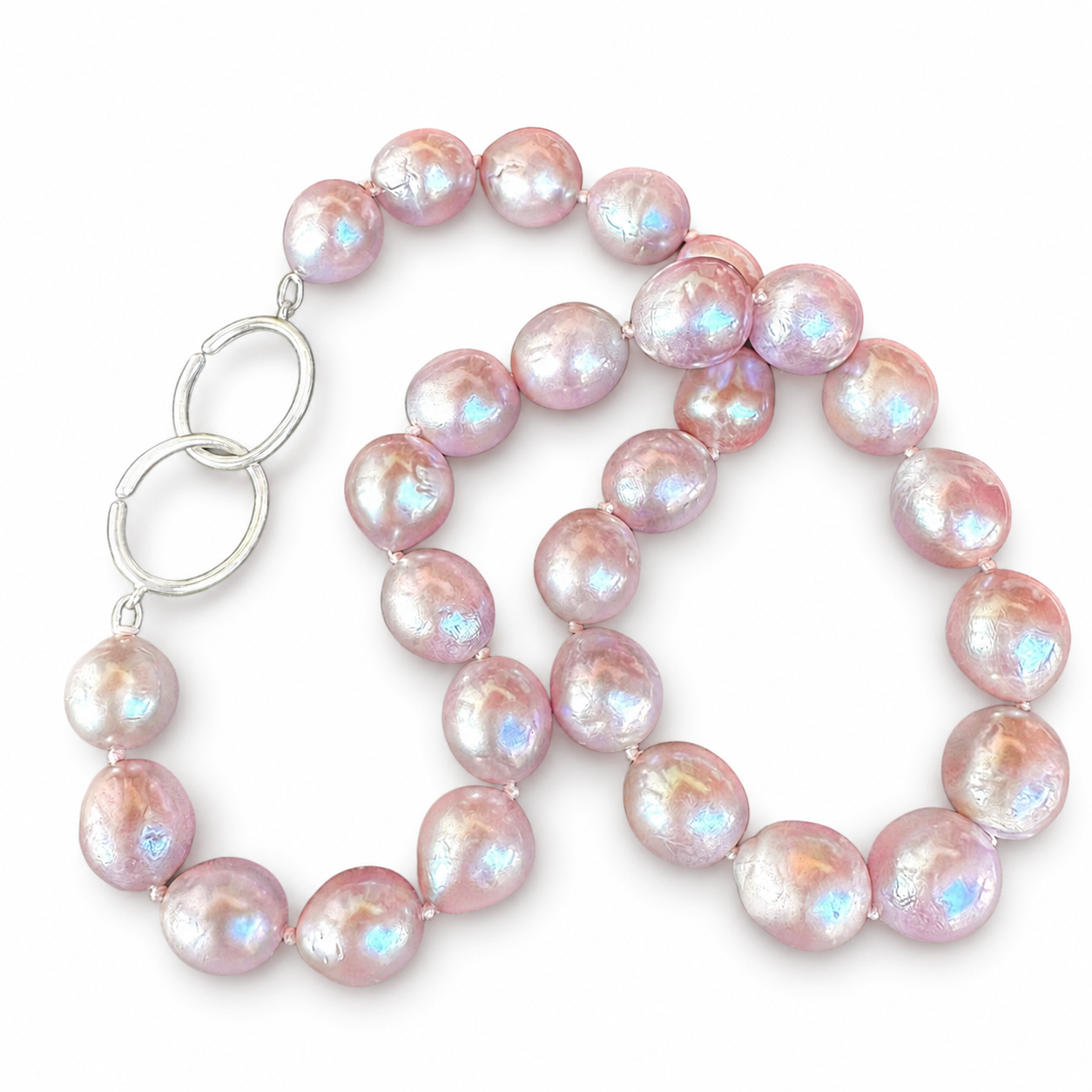
Discover the allure of our Cultured Freshwater Pearls in Pink with Sterling Silver. A unique necklace that showcases the exceptional craftsmanship of Katura.
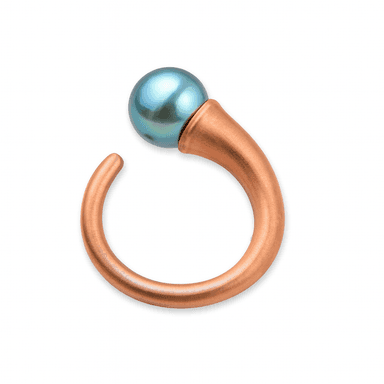
Discover the allure of the Chasing Ring in 14K Rose Gold with Tahitian Pearl. A unique, handcrafted masterpiece that captivates with its elegance and charm.
Tags:
As featured above
Starfish Live on the Coral Reef Pearl Earrings in 18K Yellow Gold with Tahitian Pearls
From the Katura studio · $2,500
Shop this piece →