Loading...
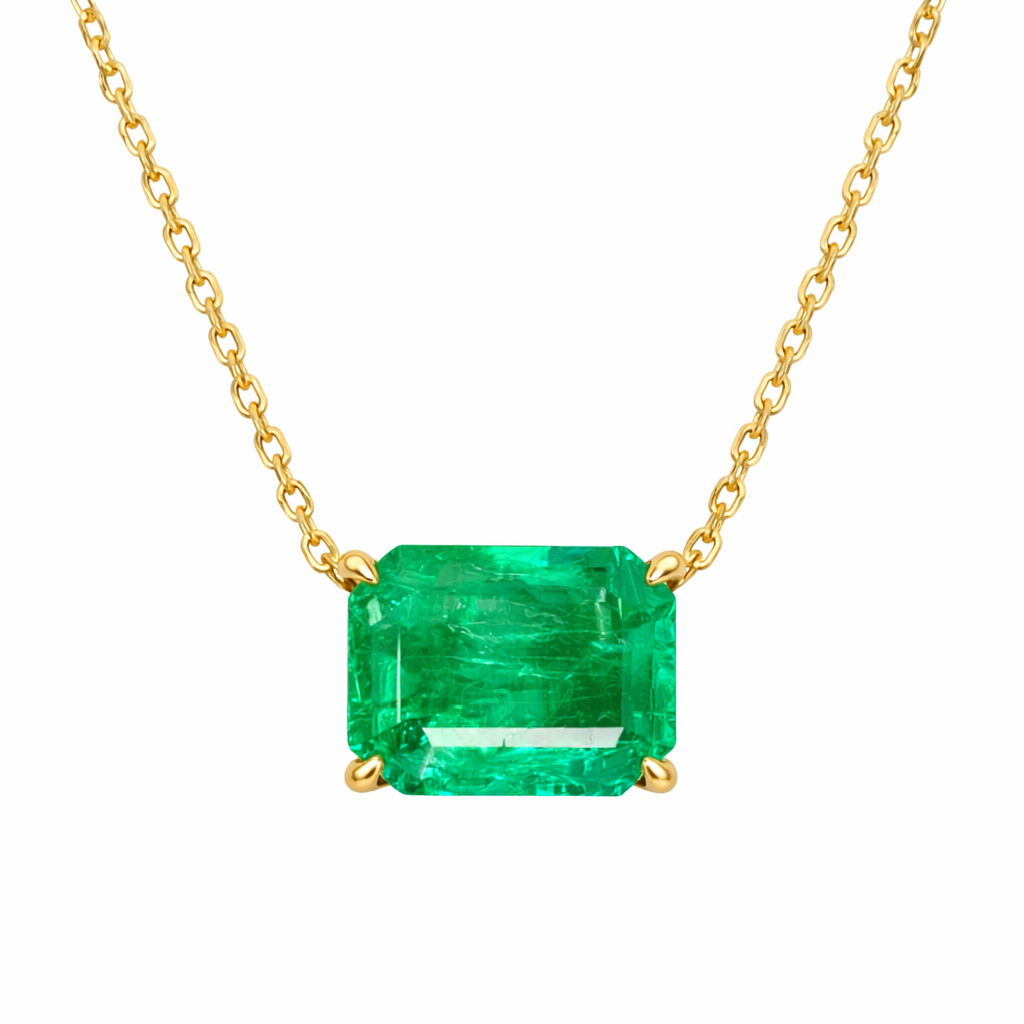
An emerald with a jardin isn't a flaw — it's a passport. A meditation on why a 2.56-carat Colombian pendant in yellow gold may be the most underrated necklace you'll ever own.
Katura 1999
Katura is the founder and designer of Katura1999 — a fine jewelry studio celebrating 25+ years of one-of-one design.
Picture, if you can, an English garden in late June. Slightly overgrown. Mossy in places. The kind of garden you walk through and think, this is alive — somebody is loving this. Now picture that garden compressed, somehow, into a translucent green stone the size of an almond, set in 14K yellow gold, hanging from a chain. Congratulations. You've imagined our 2.56 carat Colombian emerald pendant, and you've also accidentally discovered the gemological term jardin.
Emeralds, almost without exception, have inclusions. Tiny silken veils, mineral whispers, the occasional tucked-in fingerprint of the earth that made them. The trade calls these inclusions a "jardin" — French for "garden" — because that is exactly what they look like under a loupe. They are not flaws. They are biography.
This is the part where, if you've been raised on diamonds, you may need to recalibrate. Diamond grading rewards a stone that looks like cold mountain spring water — featureless, glacial, perfect. Emerald grading rewards life. A vivid green Colombian emerald with a soft jardin and good clarity is more desirable, full stop, than a too-clean emerald, which usually means the stone has been heavily oiled or — sigh — was never quite the real thing to begin with.
I set this 2.56-carat stone on graceful prongs in 14K yellow gold for a very specific reason: yellow gold gives a Colombian emerald the warm backstop it deserves. The slight gold reflection underneath the pavilion deepens the green. Set the same stone in white gold and it cools off — pretty, but you've cooled the garden into a lawn. The 14K is not an accident. It's a director's choice.
Roughly 70 to 80 percent of the world's finest emeralds come out of three Colombian mines: Muzo, Chivor, and Coscuez. Each has a slightly different fingerprint, but they all share a richness of green that the trade simply calls "Colombian color" — slightly bluish, slightly forested, completely seductive. Zambia produces beautiful emeralds, too, often with a deeper, slightly inkier green; Brazilian emeralds tend toward yellow-green. None are wrong. They are simply different sentences in the same language.
Our 2.56 carat stone is unmistakably Colombian. You can almost hear the rainforest in it.
The Spanish conquistadors found Muzo in the 1530s and immediately did what they did everywhere else, which was take everything. Many of those stones ended up in the Mughal courts of India, then the Ottoman royal collections, then — by way of a thousand strange estate routes — into the great auction houses of Europe. The Crown of the Andes, made in the 17th century from Colombian emeralds and weighing a frankly absurd 4.5 pounds, finally landed at the Met in 2015, which is when an awful lot of jewelers, myself included, suddenly remembered they had an appointment in New York.
I tell you this only because the next time someone asks if a 2.56-carat emerald is "really worth it," you can mention that the last 500 years of European royalty seem to have voted yes.
Three practical things to know.
One: emerald is softer than diamond. Mohs 7.5 to 8 versus diamond's 10. Don't sleep in this. Don't shower in this. Don't, please, garden in this. (Yes, the irony of telling you not to garden in your garden is not lost on me.) It's a pendant — it's reasonably protected on the chain — but it should not be your daily kickabout necklace.
Two: most fine emeralds are oiled. A clear, food-grade cedarwood oil is gently warmed into the stone's surface fissures to improve clarity. This is industry-standard, totally accepted, and totally reversible. Avoid ultrasonic cleaners and steamers, which can cook the oil right out. A soft cloth and warm soapy water is plenty. If a stone ever looks "drier" than you remember, your jeweler can re-oil it. It is a low-drama 20-minute procedure.
Three: this pendant wants to be worn at the collarbone. Long chains hide the stone under necklines; a 16- to 18-inch chain puts the emerald exactly where the eye lands when someone is talking to you. That's the conversation piece. Use it.
Emerald is the May birthstone, but I find that the women who actually wear emerald are not necessarily May people. They are gardeners. They are readers. They are — and I mean this as a compliment — slightly unconventional. They want a stone that is alive, not a stone that has been polished into agreement.
If that sounds like you, this 2.56-carat necklace will eventually feel less like a piece of jewelry and more like a habit. The kind you put on while you make coffee and forget you're wearing.
Wishing you a very lush spring, friends.
— Katura
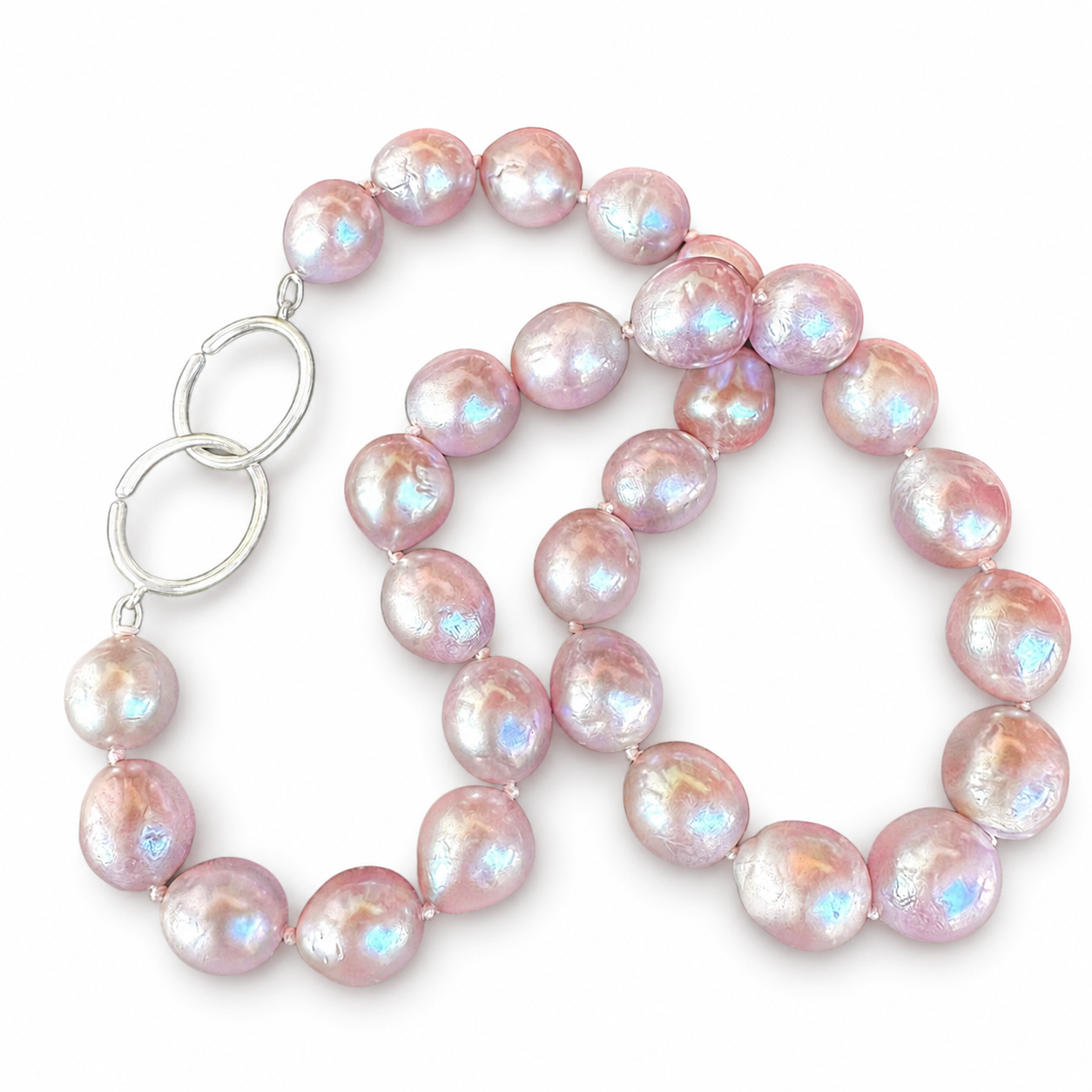
Discover the allure of our Cultured Freshwater Pearls in Pink with Sterling Silver. A unique necklace that showcases the exceptional craftsmanship of Katura.
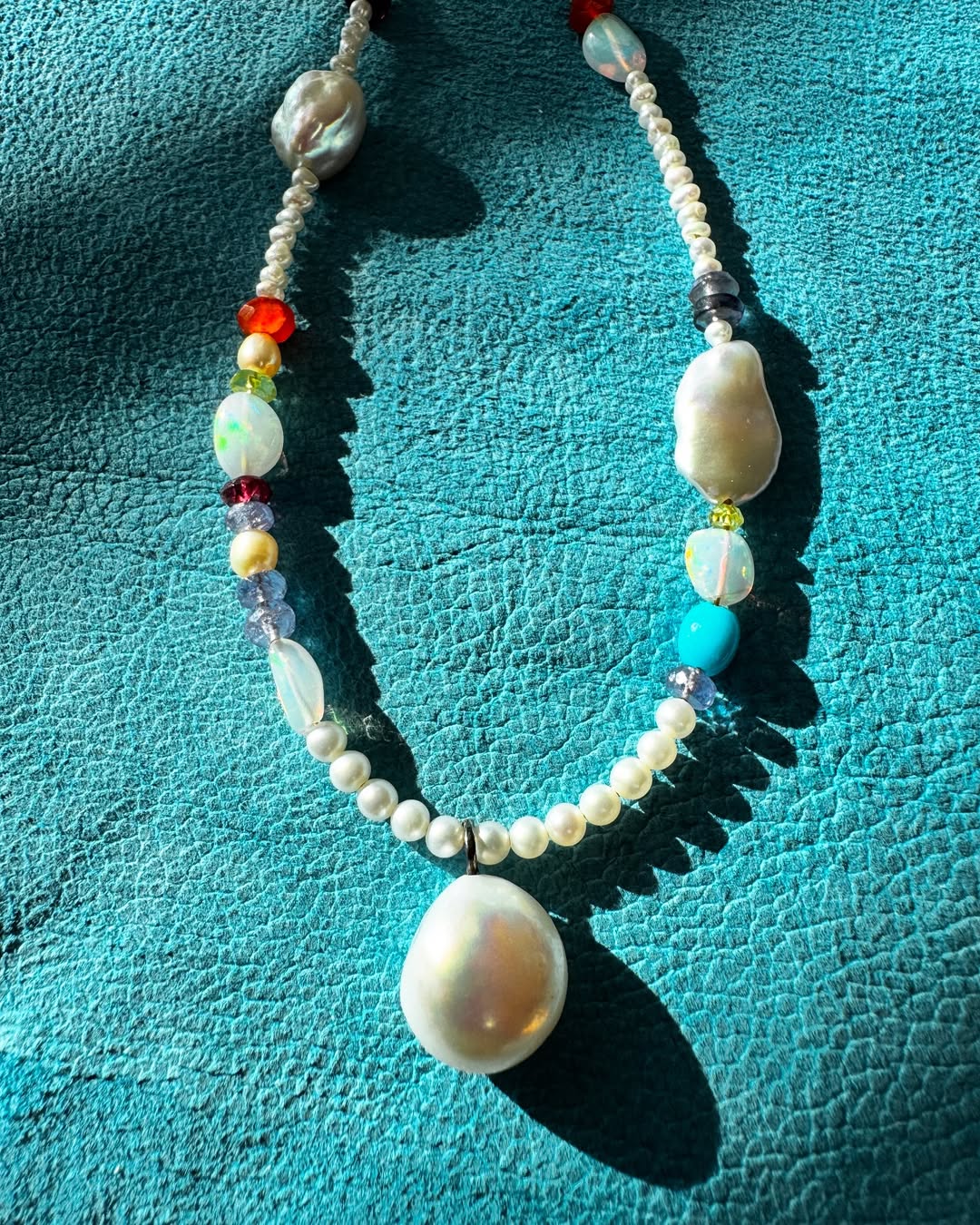
Discover the allure of the Pearls + Opals + Tanzanite necklace, a one-of-a-kind piece that marries opulence with understated elegance.
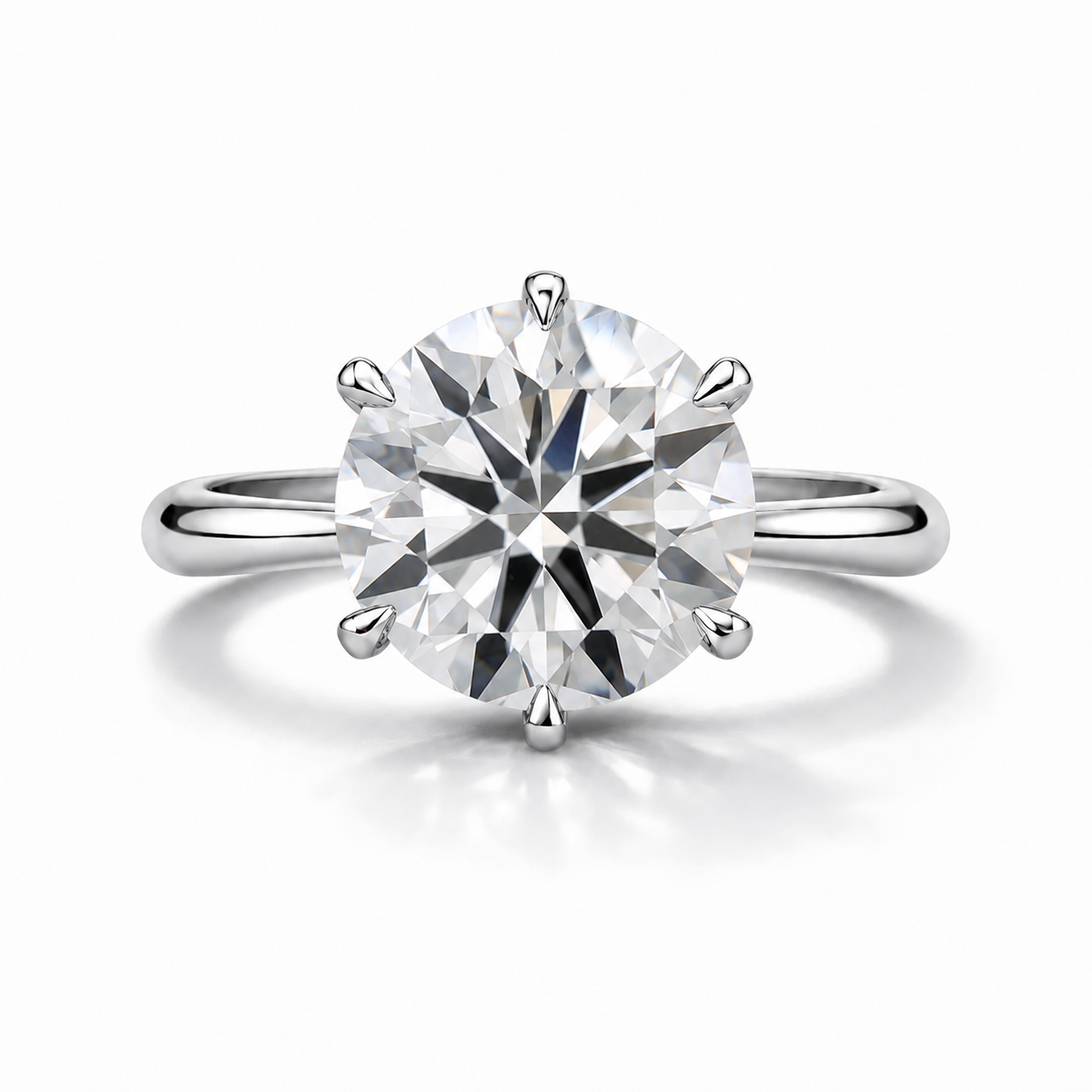
Explore the unmatched elegance of our 7.77 Carat Natural D Flawless Round Brilliant Solitaire in Platinum. Learn what makes this masterpiece truly exceptional.
Tags:
As featured above
Colombian Emerald 2.56 Carat Pendant in 14K Gold
From the Katura studio · $3,500
Shop this piece →